

Melasma &
Pigment
The Charleston complaint. Managed properly, patiently, and with a great deal of sunscreen.
Melasma is a chronic, heat- and hormone-driven pigment condition — managed, never cured. Our protocol is staged: medical topicals, a series of light peels, strict daily SPF, and cautious laser only once pigment is quiet. Sun spots are a different problem and respond faster, usually to IPL.
One of the only disadvantages of living in Charleston is how tough it is on pigment.
Charleston presents pigment with every trigger at once. UV exposure runs year-round rather than seasonally, light reflects off the harbour and off pale stucco, and the heat itself provokes melasma independently of any sunburn. Patients who managed their pigment comfortably in cooler climates arrive here and watch it flare within a summer.
That changes the clinical approach in two specific ways. First, we treat more conservatively and more often, because aggressive single treatments in a high-UV climate tend to rebound. Second, photoprotection stops being advice and becomes the actual treatment — the peels and topicals only work in its presence.
The distinction that matters most is between melasma and sun damage. Discrete brown spots are straightforward: Medical grade skincare, often in one or two sessions. Melasma is diffuse, symmetrical, deeper, and heat-reactive — and treating it with the same enthusiasm is the most common way patients are made worse. We separate the two before anything is planned.
Four stages, in order.
Identify
Melasma or sun damage? Diffuse and symmetrical, or discrete and defined? Everything downstream depends on this.
Stabilize
Medical-grade pigment inhibitors at home plus strict daily SPF. Nothing aggressive until pigment is quiet.
Correct
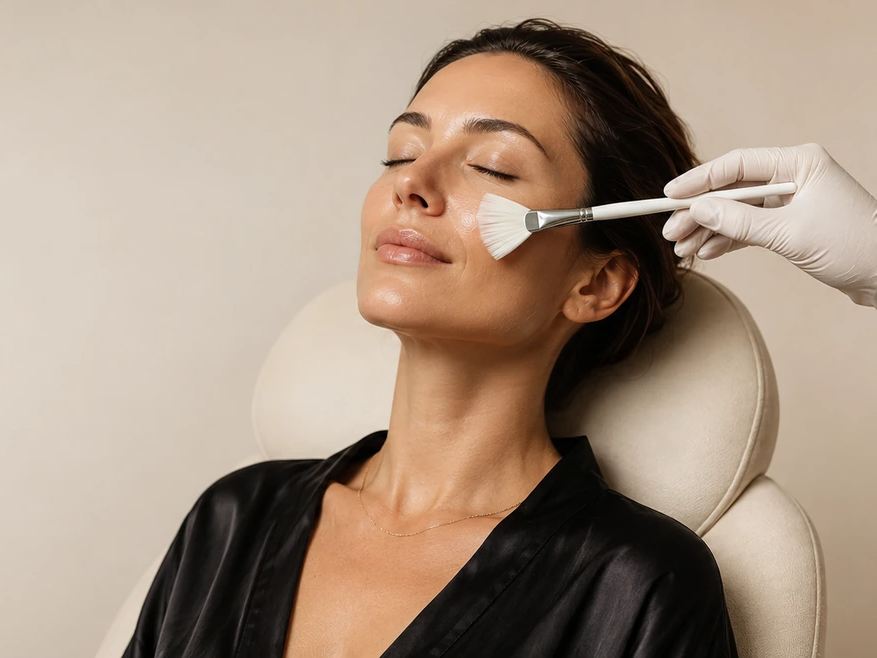
A series of three to six light-to-medium peels, four weeks apart, with photographs at every visit.
Maintain
Ongoing topicals, seasonal peels, and a frank acknowledgement that this is permanent work.
Three tools, chosen by pigment type.
The order matters more than the individual treatment. Nothing here is applied to unstable, actively flaring pigment.
Chemical Peels
First lineThe most reliable tool for melasma. Light to medium depth, monitored, and paired with home topicals.
Lumecca IPL
Sun damageExcellent on discrete brown spots and sun damage. Used with real caution in melasma, and not at all on deeper skin tones.
MOXI
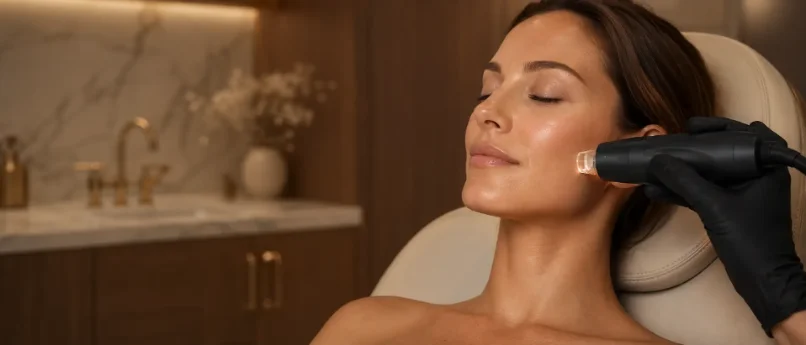
Diffuse toneFor diffuse pigment with rough texture, once melasma is stable. Gentler than most resurfacing lasers.
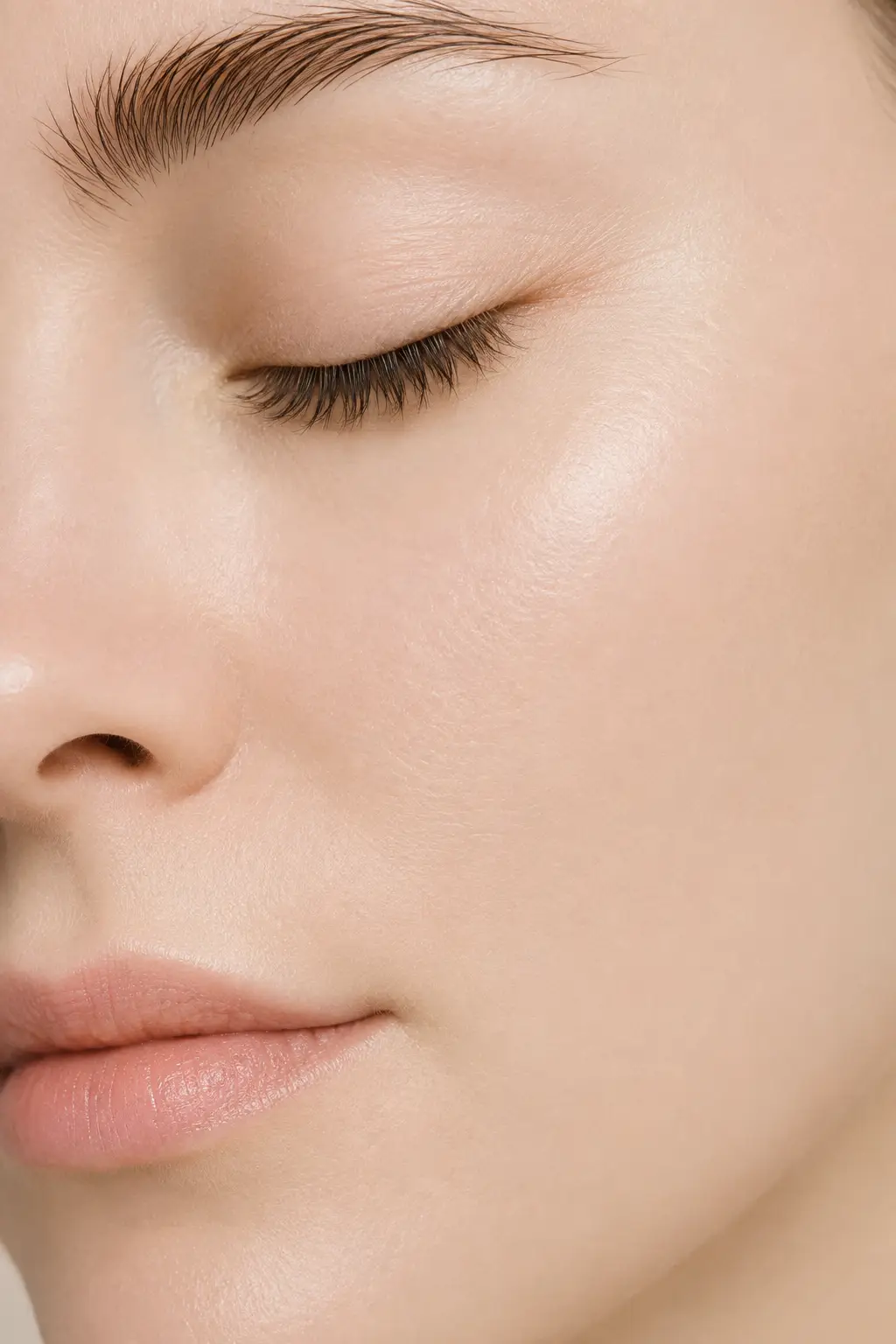
Sunscreen is the treatment.
Everything else on this page is secondary to daily broad-spectrum protection. Without it we are simply charging you to lose the same ground twice.
What the first appointment looks like.
Assessment
Magnified analysis and photographs, plus history — pregnancy, hormones, medications, sun and travel.
Diagnosis
A clear answer on whether this is melasma, sun damage, or post-inflammatory pigment. They are treated differently.
Home protocol
Medical-grade topicals and an SPF routine you will actually follow, usually three products.
In-clinic plan
A peel series scheduled monthly, with laser considered only once pigment is quiet.
Any peel we offer, monthly.
Chemical peels are one of the monthly Society Circle selections — the most straightforward way to run a pigment series across a year.
Frequently asked.
Can melasma be cured?
{{ s0 }}No, and any practice promising a cure is not being straight with you. Melasma is a chronic, hormonally and UV-driven condition that is managed rather than cured. With a good protocol we can make it substantially less visible and keep it that way — but it requires ongoing maintenance and daily sun protection.
Why is melasma so common in Charleston?
{{ s1 }}Two reasons. UV exposure here is effectively year-round, with additional reflected light off the water, and heat itself is a trigger independent of UV. Charleston summers deliver both at once, which is why melasma that was stable elsewhere often flares after a move here.
Is laser good for melasma?
{{ s2 }}Cautiously, and rarely first. Heat can provoke melasma and make it worse, so aggressive laser is the most common way melasma is mishandled. We stabilize with topicals and light peels first, and consider gentle laser only once pigment is quiet.
What treatments do you use for pigment?
{{ s3 }}It depends on which kind of pigment you have. For melasma we lead with a prescriptive topical protocol, gentle chemical peels, and strict daily photoprotection, adding low-energy resurfacing only once pigment is quiet. For true sun damage and discrete brown spots, medical grade skincare clears them efficiently. Most pigment plans here combine a homecare regimen with a short in-office series.
How is melasma different from sun spots?
{{ s4 }}Sun spots are discrete, well-defined brown lesions and respond quickly to IPL. Melasma is diffuse, patchy, symmetrical across the cheeks or forehead, sits deeper, and is provoked by heat and hormones. Treating melasma like a sun spot is how it gets worse.
How long before I see improvement?
{{ s5 }}Expect the first visible change at eight to twelve weeks with a compliant protocol. Meaningful improvement takes three to six months, and holding it is permanent work.
Does sunscreen really matter that much?
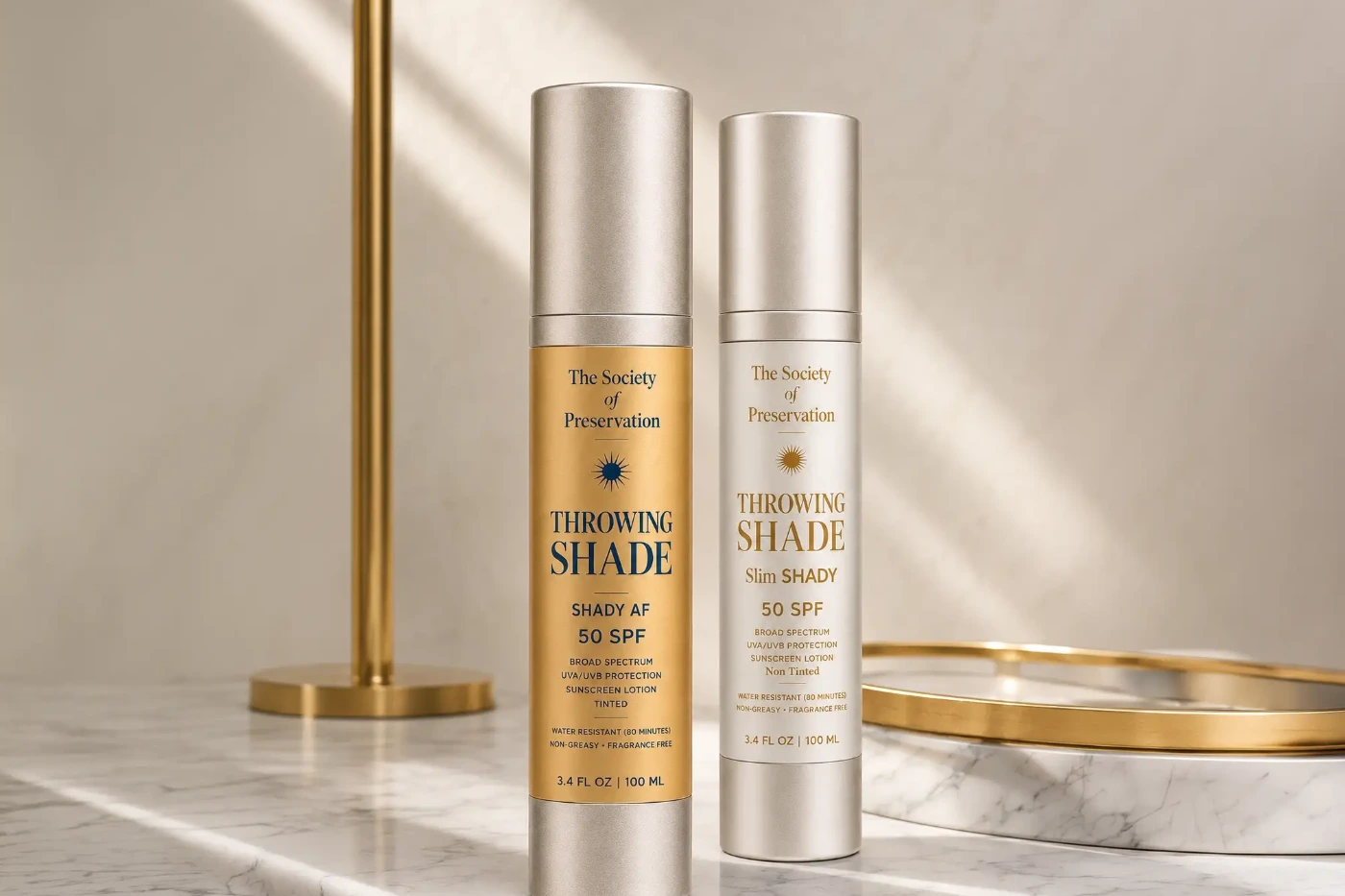
{{ s6 }}It is the single most important element, and without it nothing else we do will hold. We recommend a mineral broad-spectrum SPF reapplied through the day — including our own Throwing Shade, made for exactly this climate.
Preserved. Never altered.
Consultations are unhurried and thorough. Historic King Street, Third Floor, downtown Charleston.