
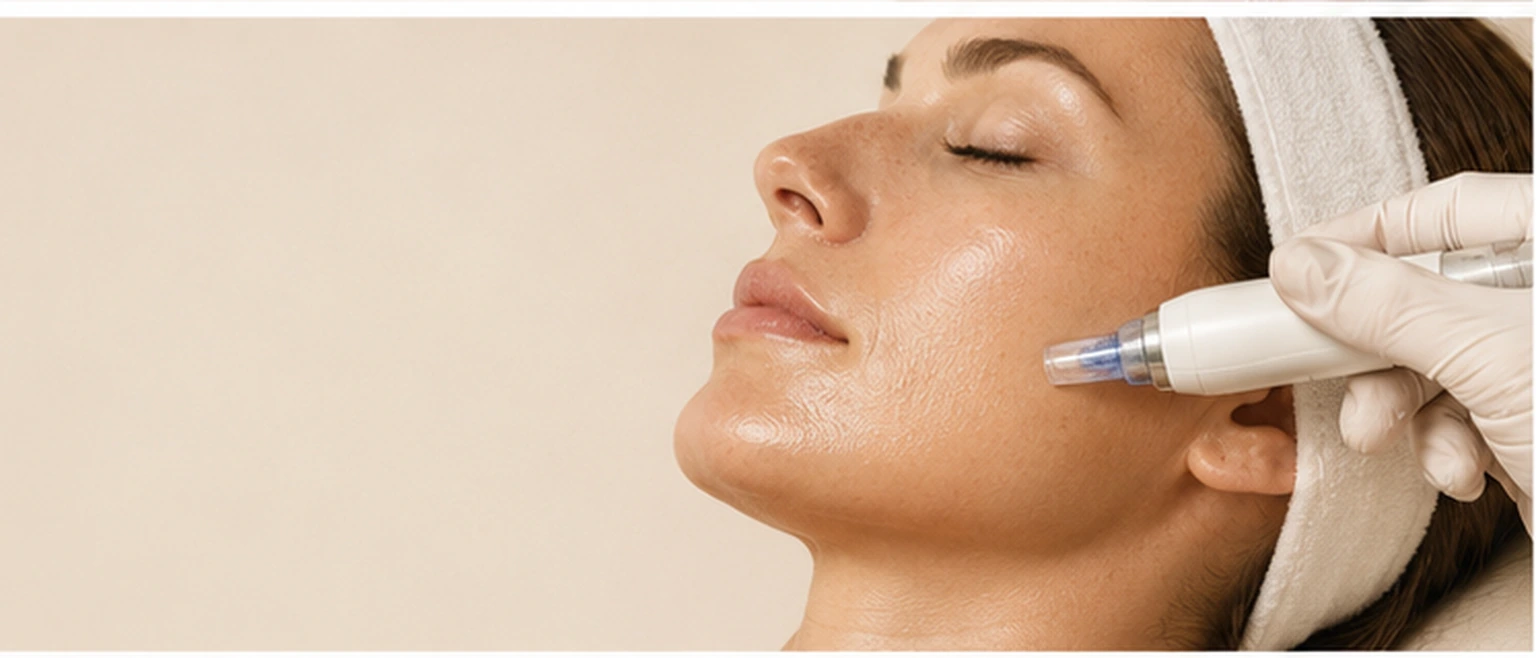
Microneedling
Collagen induction for texture, scarring and tone — face, neck and chest, in a series that builds for months.
Microneedling creates thousands of controlled micro-channels in the skin, prompting your body to build new collagen and elastin. It improves texture, pore size, acne scarring and firmness across a series of three to six, four weeks apart. Add PDRN for faster repair. Expect 24 hours of redness.
The treatment that changes what your skin is made of.
Almost everything else on our menu works on the surface or on muscle. Microneedling works on the scaffolding — the collagen and elastin that determine whether skin is firm, whether a scar sits flat, whether a pore stays open. You cannot buy that in a bottle and you cannot inject it.
The mechanism is deliberately simple. Fine sterile needles, at a depth your provider selects per area, create controlled injury. Your body repairs it the only way it knows how: by laying down new collagen. The visible result arrives slowly — most patients notice the change between weeks four and twelve, not the day after.
It is also the treatment we most often pair with something else. Polynucleotides driven through fresh channels heal faster and finish better, which is what our DNA Glow add-on does. And in Charleston we frequently stabilize pigment before starting a series, because melasma-prone skin needs care here that it would not need in a drier climate.
Six concerns, one mechanism.
Acne scarring
Rolling and boxcar scars soften as new collagen fills them from beneath. Usually a six-session goal.
Fine texture
Crepey crinkling at cheek and under-eye — one of the fastest areas to respond.
Pore size
Pores appear smaller as the surrounding collagen tightens around them.
Firmness
Mild laxity along the jaw and neck improves as elastin rebuilds.
Tone & dullness
Turnover accelerates, which evens out color and returns light to the skin.
Stretch marks
Off the face, older stretch marks respond well to a longer series.
Two ways to finish it.
Both are added to the same appointment. Member pricing shown.
The Society DNA Glow
PDRN add-onPolynucleotides driven in immediately after needling. Faster healing, better finish, and the most efficient PDRN delivery we offer.
Celluma LED
Light therapyMedical-grade LED at the end of the appointment to reduce inflammation and shorten the redness window.
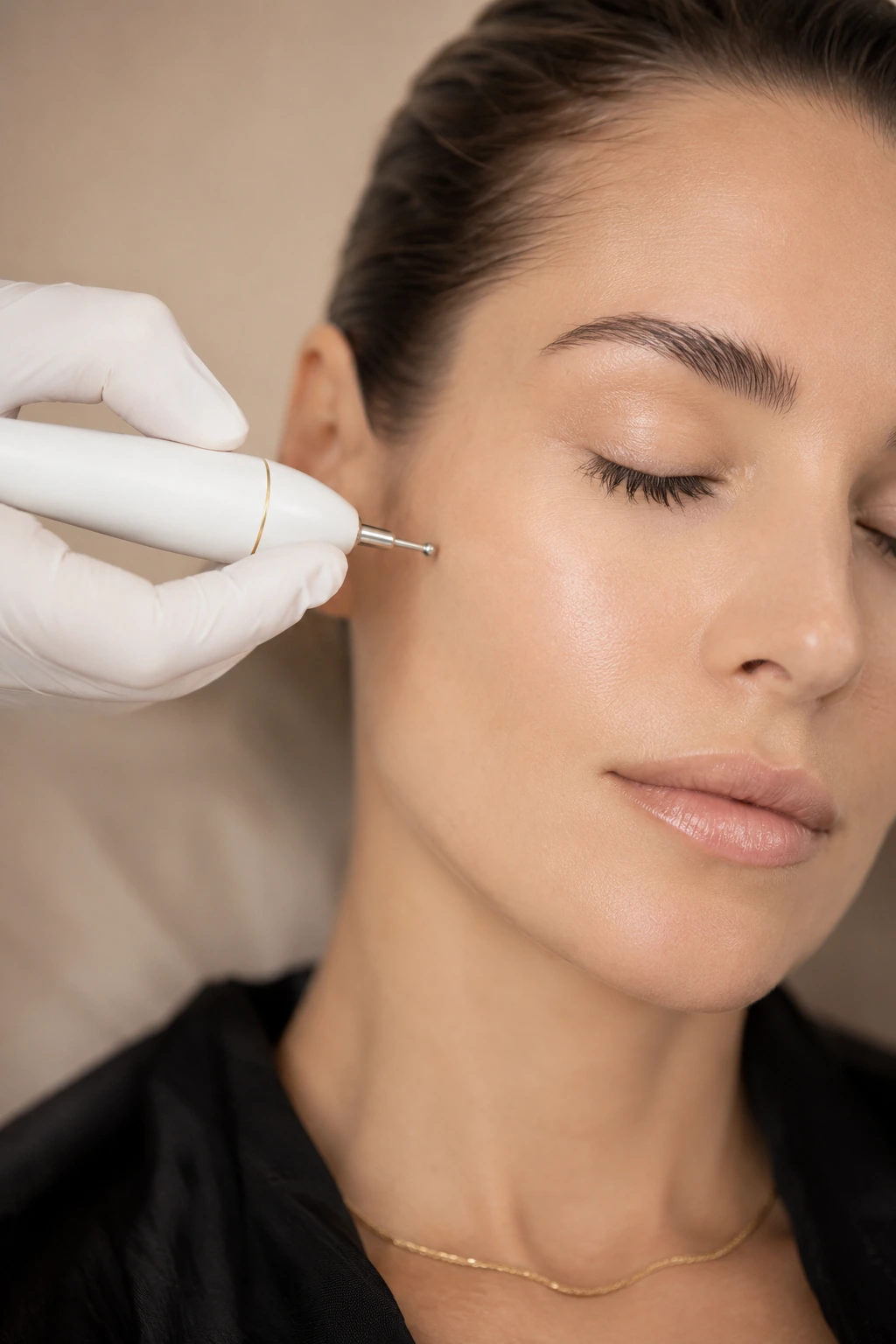
Depth by area.
Needle depth is not one setting for a whole face. We adjust across forehead, cheek, jaw and neck — and we assess pigment risk before a first session.
What the appointment looks like.
Assessment
Magnified analysis, pigment risk review, and agreement on the number of sessions.
Numbing
Topical anaesthetic for twenty to thirty minutes. Comfortable throughout.
Needling
Twenty to thirty minutes across face and neck, with depth adjusted by area.
Recovery
LED, barrier balm and sunscreen. Redness for a day, flaking around day three, and no active skincare for 48 hours.
Microneedling, face and neck.
Face-and-neck microneedling is one of the monthly Society Circle selections — the simplest way to run a full series without paying per session.
Frequently asked.
What does microneedling actually do?
{{ s0 }}Fine needles create thousands of controlled micro-channels in the skin. Your body repairs them by producing new collagen and elastin, which over a series improves texture, pore size, acne scarring and firmness. It is remodelling, not resurfacing.
How many sessions do I need?
{{ s1 }}Three to six, spaced four weeks apart, depending on what you are treating. Fine texture and pores respond by three; acne scarring usually needs six. Results continue building for around three months after the final session.
Does microneedling hurt?
{{ s2 }}We numb topically for twenty to thirty minutes first, so most patients describe it as a firm vibration rather than pain. The bonier areas — forehead, jawline — are more noticeable than the cheeks.
What is the downtime?
{{ s3 }}Expect to look sunburned for twenty-four hours and slightly flushed for a second day. Fine flaking around day three is normal. Most patients treat on a Thursday and are entirely presentable by Monday.
Should I add PDRN?
{{ s4 }}If your priority is faster, better healing, yes. The Society DNA Glow adds polynucleotides through the freshly created channels for $125 for members — the most efficient PDRN delivery we offer.
Can I microneedle with melasma?
{{ s5 }}Cautiously and only after assessment. Microneedling can occasionally provoke pigment in melasma-prone skin, so we often stabilize pigment first with a peel or topical protocol before starting a series. In Charleston this comes up often.
Can I treat my neck as well?
{{ s6 }}Yes — face and neck together is our standard treatment area, and the neck is often where patients see the clearest improvement in crepey texture.

Preserved. Never altered.
Consultations are unhurried and thorough. Historic King Street, Third Floor, downtown Charleston.